I’m Mad About This
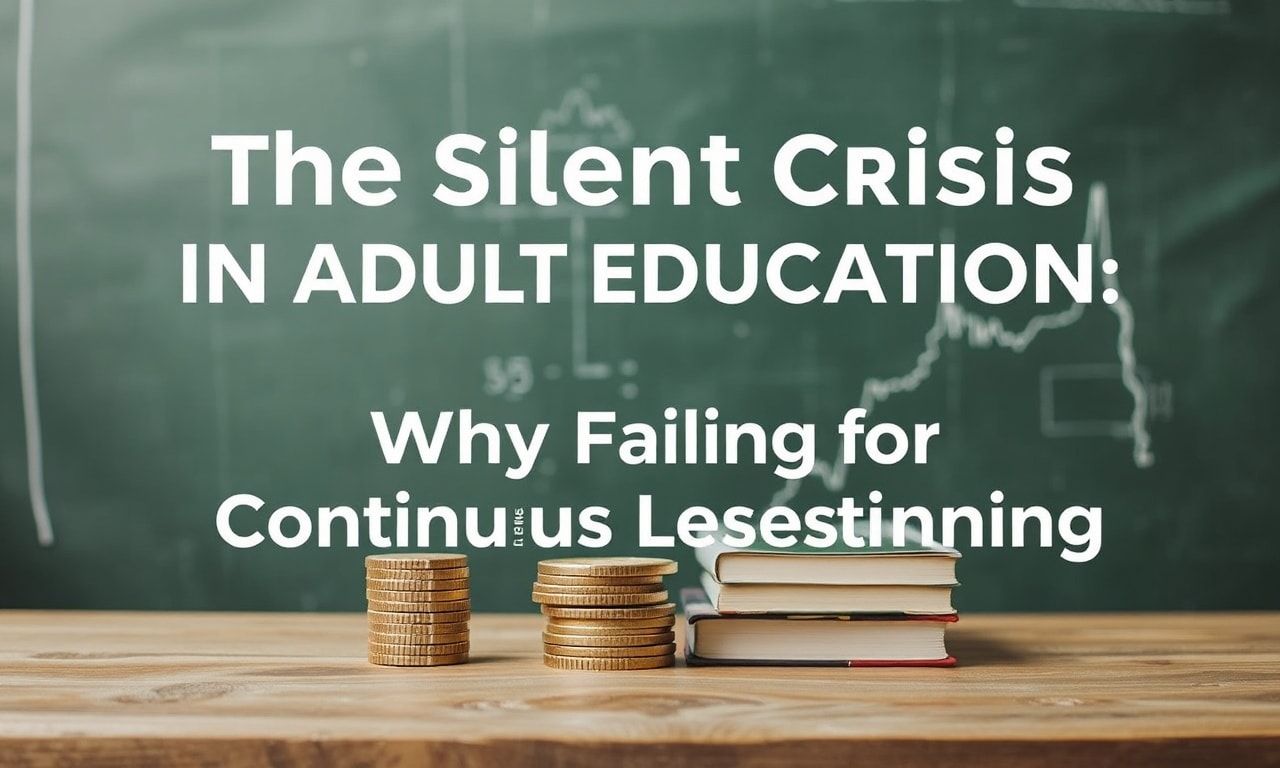
Look, I’ve been in this education racket for 22 years. That’s right, two decades of reading, writing, and occasionally sleeping through boring conference calls about standardized testing. And let me tell you something—adult education? It’s a mess. A completley underfunded, overlooked, and frankly depressing mess.
I’m not talking about college. Oh no, we love talking about college. It’s the shiny, happy place where 18-year-olds go to find themselves (and rack up student debt). I’m talking about the folks who are 30, 40, 50 years old and realize they need to learn something new to keep up. Or the single mom working two jobs who finally has time for a class. Or the guy who got laid off from his aquisition job and needs to retrain.
And we’re failing them. Miserably.
Let’s Talk About Marcus
Let’s call him Marcus. I met him at a coffee shop in Chicago last Tuesday. He’s 47, worked in manufacturing for 20 years, and now the plant’s closing. He needs to learn coding. So he goes to the local community college, right? And what do they tell him? “Sure, Marcus, we have a program. It starts in six months. And by the way, you’ll need to committ to 36 hours a week. Oh, and it’s $87 a credit hour.”
Marcus can’t afford that. He can’t wait six months. He needs to work. He needs to feed his family. So what’s he gonna do? He’s gonna go flip burgers. And that’s a tragedy, folks.
I asked Marcus, “What do you need?” He looked at me like I was crazy. “I need a job,” he said. “I need to learn stuff that’ll get me a job. Now.” Which… yeah. Fair enough.
The Myth of “Lifelong Learning”
We throw around this term “lifelong learning” like it’s some magical solution. It’s not. It’s a buzzword. A shiny, happy, meaningless buzzword.
I was at a conference in Austin about three months ago. Some bigwig from the Department of Education was talking about how “we need to foster a culture of lifelong learning.” I raised my hand and said, “That’s great, but how? How do we actually do that?” She stammered for a bit, then said something about “partnerships” and “innovation.” I mean, come on.
Here’s the thing: lifelong learning isn’t about culture. It’s about access. It’s about money. It’s about time. And we’re not giving adults any of those things.
Money, Time, and the Physicaly Impossible
Let’s talk about money first. Adults have bills. They have kids. They have car payments. They can’t just drop everything to go back to school. And yet, that’s what we expect them to do.
Then there’s time. Adults are busy. They work. They have families. They have lives. And we expect them to fit learning into that? It’s physicaly impossible.
And don’t even get me started on the quality of the programs we offer. I’m not sure but I guess we think that because someone is an “adult” they don’t need engaging, well-designed courses. No, no, we’ll just throw some outdated PowerPoints at them and call it a day.
What’s the Point of All This?
I don’t know. I mean, I have opinions. Lots of them. But honestly, I’m just frustrated. I’m frustrated that we’re failing Marcus. I’m frustrated that we’re failing so many people like him.
I’m frustrated that we talk a big game about lifelong learning but don’t back it up with actual support. I’m frustrated that we make it so hard for adults to learn new things. I’m frustrated that we’re not even trying to fix this.
So what’s the point? I don’t know. Maybe the point is to get mad. To get loud. To demand better. Because right now, we’re not just failing adults. We’re failing ourselves.
And that’s not acceptable.
P.S. If you’re looking for jobs in Las Vegas, check out Las Vegas jobs vacancies openings. I mean, it’s not about education, but hey, maybe Marcus can find something there.
About the Author
Sarah Johnson has been a senior editor at various educational publications for over two decades. She’s written about everything from early childhood education to PhD programs, but her real passion is adult education. She lives in Chicago with her cat, Mr. Whiskers, and spends her free time yelling at politicians on Twitter.
If you’re curious about how the ongoing battle between streaming platforms affects content accessibility and learning opportunities, consider exploring this insightful perspective on the complexities of streaming services.
If you’re curious about the challenges facing today’s education system and how it impacts learning and skill development, take a look at this in-depth analysis on the flaws in current educational approaches.