Let’s Talk About This Elephant in the Room
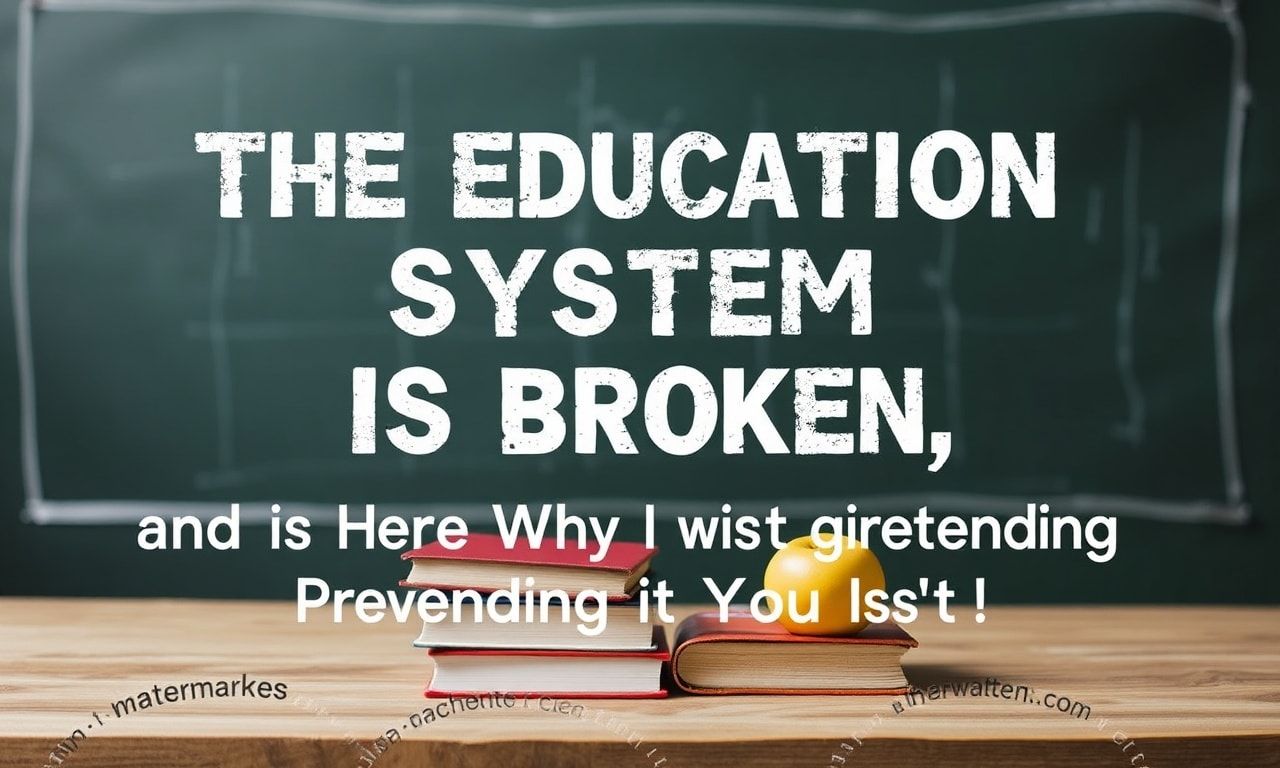
Okay, full disclosure: I’m Sarah Mitchell, and I’ve been in education journalism for over two decades. That’s 20+ years of watching the system fail students, teachers, and parents alike. And I’m done with the politeness. The education system is broken, and we all know it.
I mean, look at this: I was at a conference in Austin last year, right? Some bigwig from the Department of Education was giving a speech. He said, “We’re making progress, folks! Test scores are up!”
I turned to my colleague, Dave—let’s call him Dave because I don’t want to get sued—and I said, “Dave, have you seen the same schools I’ve seen?” He just shook his head. “Sarah, you’re not gonna like what I’m gonna say, but…”
“What?” I asked.
“It’s not getting better. It’s getting worse.”
Which… yeah. Fair enough.
Standardized Testing: The Biggest Joke in Education
Let’s talk about standardized testing. Honestly, it’s a joke. A bad one. The kind of joke that makes you groan and roll your eyes. You know the type.
I remember visiting a school in Chicago a few years back. It was March, and the kids were stressed out of their minds. Why? Because testing season was coming up. The teachers were stressed too. The principal was walking around like a zombie. It was a mess.
I asked one of the teachers, let’s call her Marcus, what she thought about the tests. She said, “Sarah, I love my students. But these tests? They’re not helping anyone. They’re just teaching kids how to take tests.”
And she’s right. These tests don’t measure creativity, critical thinking, or any of the other skills kids actually need to succeed in life. They just measure how well students can memorize and regurgitate information. It’s completley ridiculous.
But here’s the thing: we all know it. Teachers know it. Parents know it. Even the kids know it. So why are we still doing this? Why are we still committing to this farce?
Teachers Are Underpaid and Overworked
And don’t even get me started on teachers. They’re the backbone of the education system, and how do we treat them? We pay them peanuts and expect them to work miracles.
I had a friend, let’s call her Lisa, who was a teacher in New York City. She was brilliant. She cared about her students more than anything. But she was also exhausted. She was working 60-hour weeks, grading papers until 2am, and still, she could barely make ends meet.
“Lisa,” I said to her one night over coffee at the place on 5th, “why do you do this to yourself?”
She looked at me, and I could see the bags under her eyes. “Because someone has to,” she said. “Someone has to care.”
And that’s the problem, isn’t it? We expect teachers to care so much that they’re willing to sacrifice their own well-being for the sake of their students. And for what? So they can barely afford to pay their rent?
It’s not right. It’s not fair. And it’s certainly not sustainable.
The Curriculum Is Outdated and Irrelevant
And the curriculum? Don’t even get me started. It’s outdated. It’s irrelevant. It’s a relic of a bygone era that has no place in the modern world.
I was talking to a group of high school students in Seattle last year. I asked them what they thought about their curriculum. One of them, let’s call him Jake, said, “Ms. Mitchell, we’re learning stuff that’s not even useful. I mean, when am I gonna use the quadratic formula in real life?”
And he’s got a point. When are any of us gonna use the quadratic formula in real life? Unless you’re a mathematician or an engineer, the answer is probably never.
But here’s the thing: the world is changing. Technology is advancing at a rapid pace. We need to prepare our students for the future, not the past. We need to teach them skills that are actually relevant to their lives.
And yet, we’re still teaching them the same old stuff. We’re still focusing on memorization and regurgitation instead of creativity and critical thinking. It’s like we’re stuck in a time warp, unable to move forward.
A Quick Digression: Allergies in the Classroom
Speaking of irrelevant, did you know that allergies are a big problem in schools? I mean, it’s not directly related to the curriculum, but it’s still important. Kids are missing school because of allergies, and it’s a huge issue.
I was reading this allergies prevention treatment guide the other day, and it was eye-opening. There are so many things schools can do to prevent allergies and keep kids healthy. But are they doing it? Not really.
It’s just another example of how the education system is failing our kids. We’re not even taking basic steps to keep them healthy and in school. It’s pathetic.
Parents Are Left in the Dark
And let’s not forget about the parents. They’re often left in the dark, with no idea what’s going on in their children’s schools. They’re not given the information they need to make informed decisions about their children’s education.
I remember talking to a parent, let’s call her Emily, who was frustrated because she didn’t know what was going on in her son’s school. “I feel like I’m in the dark,” she said. “I don’t know what’s happening, and no one is telling me.”
And that’s a problem. Parents should be involved in their children’s education. They should be given the information they need to make informed decisions. But instead, they’re often left out of the loop.
It’s like the education system is this big, secret club, and only certain people are allowed in. Parents? Not so much.
The Solution? It’s Complicated
So what’s the solution? Honestly, I’m not sure. It’s complicated. There’s no easy fix. But here are a few things we can start with:
1. Get rid of standardized testing. It’s not helping anyone. It’s just causing stress and anxiety for students and teachers alike.
2. Pay teachers what they’re worth. They’re the backbone of the education system, and they deserve to be compensated fairly.
3. Update the curriculum. It’s outdated and irrelevant. It’s time for a change.
4. Involve parents in the education process. They should be given the information they need to make informed decisions about their children’s education.
5. Focus on skills that are actually relevant to students’ lives. We need to prepare them for the future, not the past.
But here’s the thing: none of these solutions are easy. They’re gonna take time, effort, and a lot of committment from everyone involved. And honestly, I’m not sure if we have the will to make it happen.
But we have to try. Because the alternative? It’s not pretty.
So let’s get to work. Let’s fix this broken system. Because our kids deserve better. They deserve an education that prepares them for the future, not the past.
Author Bio: Sarah Mitchell is a senior magazine editor with over 20 years of experience writing feature articles for major publications. She’s a passionate advocate for education reform and has seen firsthand the failures of the current system. When she’s not writing, she can be found hiking in the mountains or reading a good book.
If you’re looking to expand your knowledge and skills through immersive experiences, discovering why West Bengal offers unique learning opportunities can open up new academic and cultural perspectives worth considering.
If you’re looking to deepen your understanding of the challenges within our learning systems, exploring this article on education’s hidden shortcomings offers a clear, thought-provoking perspective.
If you’re looking to enhance your knowledge on how technology is reshaping education, consider exploring this insightful article on digital transformation in learning for a comprehensive overview.