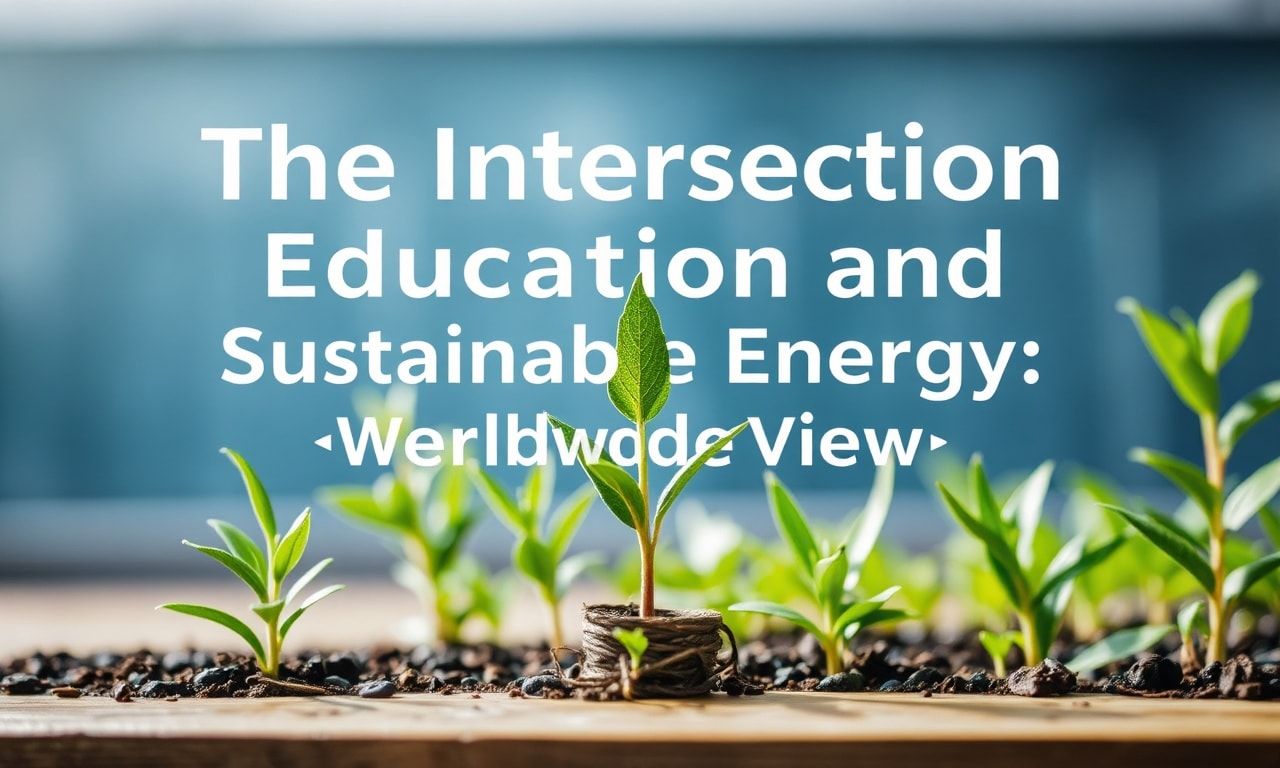
The Importance of Sustainable Energy Education
In an era where climate change and sustainability are at the forefront of global conversations, the role of education in promoting sustainable energy practices cannot be overstated. Educational institutions worldwide are increasingly incorporating courses and programs focused on renewable energy, energy efficiency, and sustainable development. These initiatives aim to equip students with the knowledge and skills necessary to address the complex challenges posed by our evolving energy landscape.
The Role of Curriculum Development
Curriculum development in the field of sustainable energy is a multifaceted process that involves integrating interdisciplinary approaches. Subjects such as physics, chemistry, environmental science, and engineering are combined to provide a comprehensive understanding of energy systems. For instance, students might explore the principles of solar energy, wind power, and biofuels, as well as the economic and political factors influencing energy policies. This holistic approach ensures that graduates are well-prepared to contribute to the development and implementation of sustainable energy solutions.
Moreover, educational institutions are increasingly collaborating with industry leaders and research organizations to stay abreast of the latest advancements in energy technology. These partnerships often result in the creation of specialized courses and research projects that bridge the gap between academic theory and practical application. For example, students might participate in projects that involve designing and testing prototypes of renewable energy systems, thereby gaining hands-on experience that is invaluable in their future careers.
Global Initiatives and Case Studies
Several countries have made significant strides in integrating sustainable energy education into their national curricula. In Europe, for instance, countries like Germany and Denmark have established themselves as leaders in renewable energy education. German universities offer a wide range of programs in energy engineering and renewable energy technologies, while Danish institutions focus on wind energy and sustainable urban planning. These programs not only attract students from within the country but also draw international students seeking to specialize in these fields.
In Spain, the emphasis on renewable energy education is evident in the numerous courses and research initiatives focused on solar and wind energy. For the latest updates and insights into Spain’s energy sector, you can refer to noticias de energía en España actualizadas. These resources provide valuable information on the country’s progress in renewable energy adoption and the educational programs supporting this transition.
The Impact of Technology on Energy Education
The advent of digital technology has revolutionized the way sustainable energy education is delivered. Online platforms and virtual learning environments have made it possible for students to access high-quality educational resources from anywhere in the world. Massive Open Online Courses (MOOCs) and webinars offer flexible learning opportunities, allowing students to study at their own pace and convenience. Additionally, virtual laboratories and simulations provide a safe and controlled environment for students to experiment with different energy systems and technologies.
Furthermore, the use of data analytics and artificial intelligence in energy education has opened up new avenues for research and innovation. Students can now analyze large datasets to identify trends and patterns in energy consumption, predict future energy needs, and develop strategies for optimizing energy efficiency. These technological advancements not only enhance the learning experience but also prepare students for the increasingly data-driven nature of the energy industry.
Challenges and Future Directions
Despite the progress made in sustainable energy education, several challenges remain. One of the primary obstacles is the lack of standardized curricula and certification programs across different countries. This inconsistency can hinder the mobility of students and professionals in the field of renewable energy. To address this issue, international organizations and educational institutions are working towards developing globally recognized standards and accreditation systems.
Another challenge is the need for continuous professional development and lifelong learning. The energy sector is rapidly evolving, with new technologies and policies emerging at a rapid pace. Therefore, it is essential for educators and professionals to stay updated with the latest developments through workshops, seminars, and online courses. By fostering a culture of continuous learning, the education sector can ensure that the workforce is equipped with the skills and knowledge needed to drive the transition towards a sustainable energy future.
In conclusion, the intersection of education and sustainable energy presents a unique opportunity to address the pressing challenges of our time. By integrating interdisciplinary approaches, leveraging technology, and fostering global collaboration, educational institutions can play a pivotal role in shaping a sustainable future. As we continue to explore innovative solutions and best practices, the importance of education in promoting sustainable energy cannot be overstated.
Delve into the fascinating relationship between legal frameworks and educational systems with our latest exploration, law and education insights, offering a comprehensive look at their interconnected impact.
To enhance your understanding of the practical applications of fashion studies, consider exploring travel-friendly fashion accessories and their cultural significance.
Expand your knowledge in agricultural sciences with our latest article, innovations shaping farming today, offering a thorough examination of recent advancements in the field.